


Gongzheng
Gongzheng
Gongzheng
Gongzheng
Gongzheng
Gongzheng
Gongzheng
Gongzheng
Gongzheng
Gongzheng
Gongzheng
Gongzheng
Gongzheng
Gongzheng
Gongzheng
Gongzheng

Branchennachrichten
Aufbau einer Bremssicherheitslinie: Einzelheiten zur Zusammensetzung und Wartung des Druckluftbremssystems

Was sind die Hauptkomponenten des LKW-Druckluftbremssystems?
Die Druckluftbremsanlage für LKW ist ein wichtiger Garant für das sichere Fahren großer Fahrzeuge. Der Antrieb der Bremsvorrichtung erfolgt über Druckluft, um eine effiziente und zuverlässige Bremswirkung zu erzielen. Das System ist komplex aufgebaut und setzt sich aus einer Vielzahl professioneller Komponenten zusammen. Die verschiedenen Teile arbeiten zusammen, um sicherzustellen, dass das Fahrzeug unter verschiedenen Arbeitsbedingungen stabil bremsen kann.
Luftkompressor
Die air compressor is the power source of the entire air brake system. Its main function is to use the engine power to compress the air, compress the air in the atmosphere to a high pressure state, and provide the system with the air source required for braking. The air compressor is usually driven by the engine crankshaft belt, with a sturdy structure and high working efficiency. The compressed air has a high pressure and temperature and needs to be processed later before it can be used.
Lufttrockner
Die air dryer is installed between the air compressor and the air tank. Its main function is to remove moisture and oil from the compressed air to prevent ice and corrosion inside the system. If the moisture in the air is not removed in time, it will cause the brake line to freeze in cold weather, seriously affecting the braking performance. The air dryer contains a desiccant inside, which can effectively absorb moisture, and is equipped with an automatic drainage device to keep the air dry and clean.
Lufttank
Die air tank is used to store compressed air that has been dried to ensure that the brake system has a stable and continuous air supply when in use. The air tank is usually divided into a main air tank and an auxiliary air tank, and the capacity is determined according to the size of the vehicle and the braking demand. Condensation often accumulates inside the air tank and needs to be discharged regularly to prevent internal corrosion and blockage of the pipeline.
Bremsventil (Fußbremsventil)
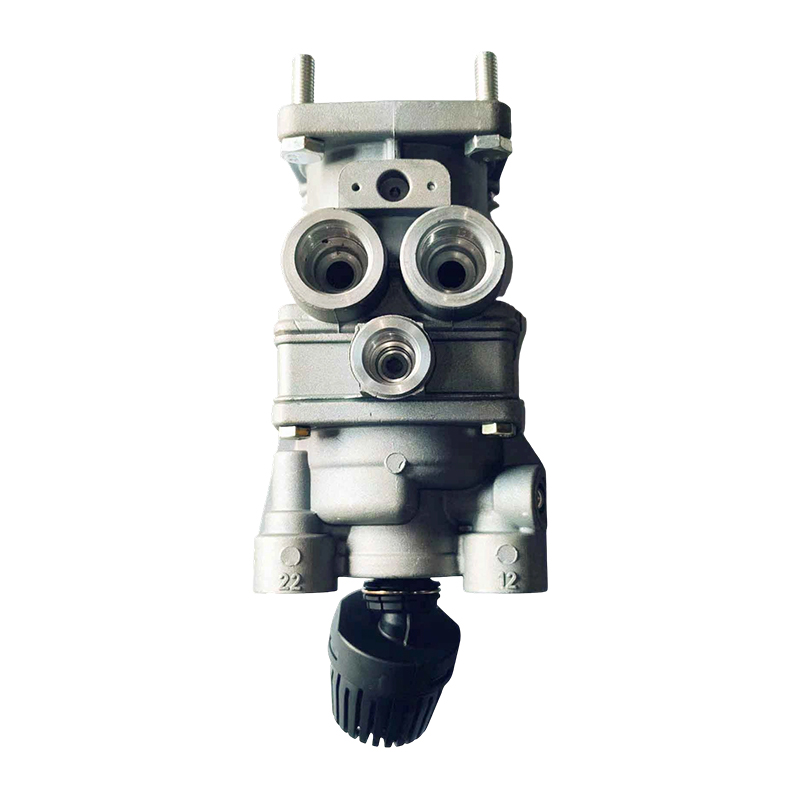
Die brake valve is a key component for the driver to control air brakes. When the brake pedal is pressed, the brake valve adjusts the air pressure to the brake chamber, drives the brake mechanism to operate, and achieves vehicle deceleration or parking. The brake valve used in modern trucks usually integrates pressure feedback and multi-stage adjustment functions to ensure sensitive braking response and safety and reliability.
Bremsluftkammer
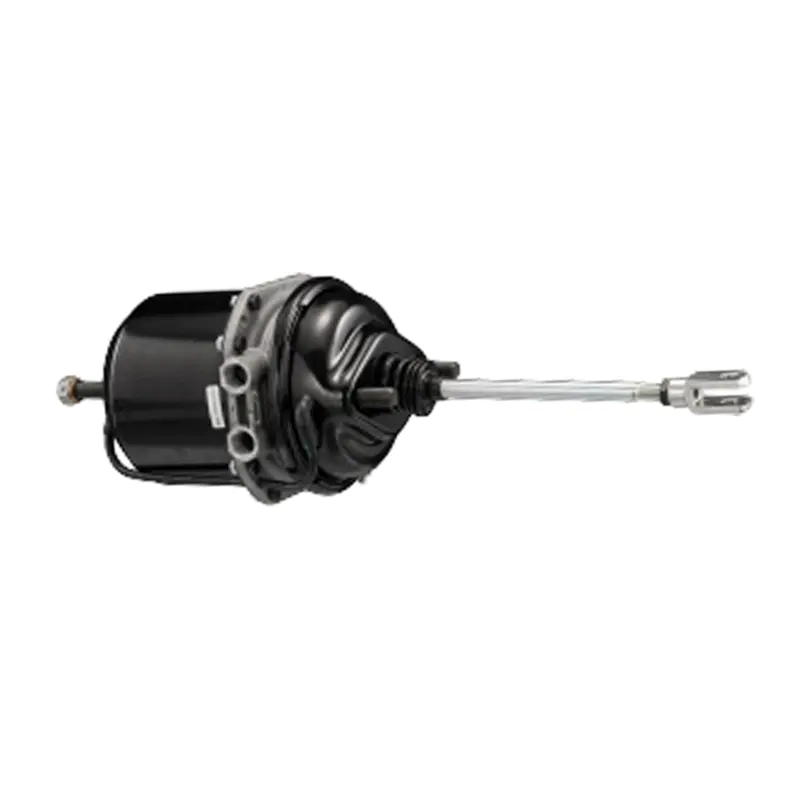
Die brake air chamber is the core component that converts air pressure into mechanical force. A diaphragm or piston is arranged in the air chamber, which pushes the connecting rod after receiving the air pressure from the brake valve, and drives the brake shoe or brake pad to press the brake drum or brake disc. Brake chambers are divided into service brake chambers and spring brake chambers. The service brake chamber is mainly responsible for braking when the vehicle is driving, while the spring brake chamber is used for parking and emergency braking.
Federspeicherbremskammer
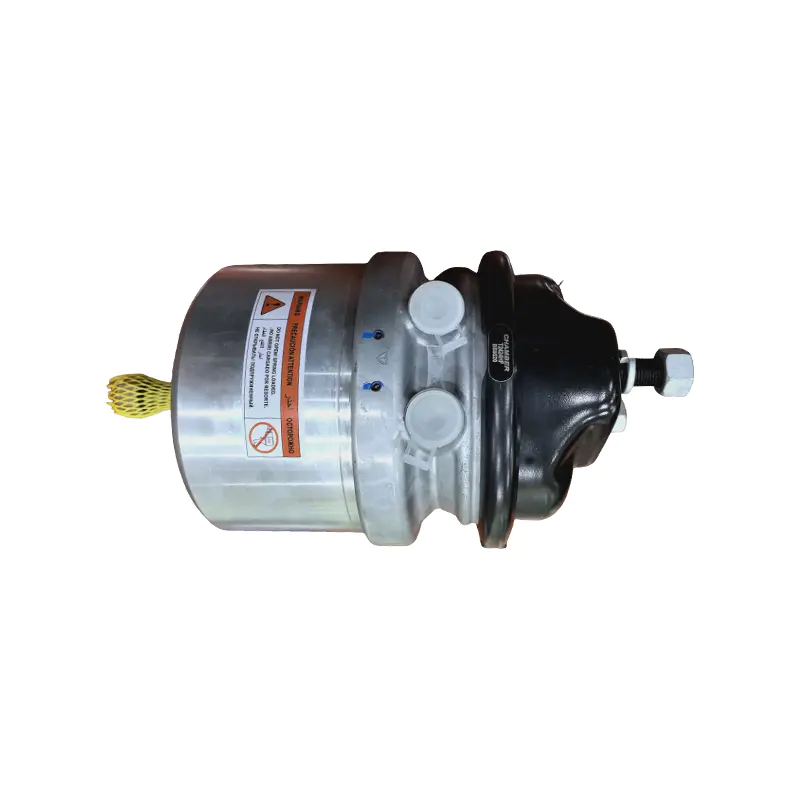
Die spring brake chamber is equipped with a strong preload spring, which uses the mechanical force of the spring to maintain the braking state. This component is mostly used for parking brakes to ensure that the vehicle does not slip when parking. After the engine is started and inflated, the air pressure will compress the spring and release the braking state. The safety performance of the spring brake chamber is extremely important, and the integrity and air pressure of the spring need to be checked regularly.
Bremspleuel und Regler
Die brake connecting rod transmits the thrust of the brake chamber to the brake mechanism to complete the conversion of air pressure to mechanical force. The regulator is responsible for automatically or manually adjusting the gap between the brake shoe and the brake drum to compensate for the wear of the brake shoe and maintain the braking efficiency. The automatic regulator can reduce the frequency of manual adjustment and improve the stability and safety of the system.
Bremsleitung
Die brake line includes the air pipeline connecting the compressor, air tank, brake valve and air chamber. The pipeline material must be resistant to high pressure, corrosion and cold, and is usually made of a combination of rubber hoses and steel hard pipes. Reasonable pipeline design can prevent air pressure leakage and mechanical damage, and is the basis for ensuring the air tightness and stability of the brake system.
Sicherheitsventil
Die safety valve is installed at the air tank and key pipeline positions to prevent the system air pressure from exceeding the set upper limit. When the system air pressure rises abnormally, the safety valve automatically opens to release excess gas to avoid bursting of the air tank or pipeline and ensure system safety. The safety valve must be inspected regularly to ensure its reliability.
Hilfsgeräte
Die air brake system is equipped with a variety of auxiliary devices, such as barometers, air pressure alarms and pressure sensors. The barometer provides the driver with real-time air pressure information, and the air pressure alarm sounds an alarm when the air pressure is lower than the safety threshold, reminding the driver to deal with it in time. The pressure sensor provides data support for the vehicle's electronic control unit to ensure intelligent management of the system.
Wie wandelt die Bremskammer Luftdruck in mechanische Kraft um?
Die brake chamber is a key actuator in the truck air brake system. Its core function is to convert the air pressure energy of compressed air into mechanical force, thereby driving the brake mechanism to slow down or stop the vehicle. The design structure and working principle of the brake chamber are directly related to the response speed of the brake system and the stability of the braking force.
Grundaufbau der Bremskammer
Die brake chamber is mainly composed of a chamber shell, a diaphragm (or piston), a push rod and a spring. The chamber shell is made of solid metal material, and the interior is divided into two main spaces: the air pressure chamber and the spring chamber. The diaphragm is usually made of wear-resistant rubber material, with good sealing performance and can withstand repeated changes in air pressure. The push rod connects the diaphragm or piston to transmit the thrust generated by the air pressure to the brake mechanical part.
Funktionelle Unterscheidung zwischen Luftdruckkammer und Federkammer
Die air pressure chamber is the part of the brake chamber that receives compressed air. Air enters the air pressure chamber from the brake valve through the pipeline, and the air pressure increases, pushing the diaphragm or piston outward. The spring chamber is equipped with a preloaded spring to provide reverse force and is used for parking brakes. When the air pressure is low, the spring force pushes the push rod back to the initial position and releases the brake state.
Funktionsprinzip der Umwandlung von Luftdruck in mechanische Kraft
Tritt der Fahrer auf das Bremspedal, leitet das Bremsventil Druckluft in die Luftdruckkammer der Bremsluftkammer ein. Der Luftdruck in der Luftdruckkammer steigt schnell an und wirkt auf die Oberfläche der Membran, um Schub zu erzeugen. Die Stärke des Schubes ist proportional zum Luftdruck und der Fläche der Membran. Die Membran dehnt sich unter der Wirkung des Luftdrucks nach außen aus und drückt die angeschlossene Schubstange in eine axiale Bewegung. Die Bewegung der Schubstange treibt die Pleuelstange und den Einstellmechanismus an, um die Luftdruckenergie in mechanische Kraft umzuwandeln, die auf die Bremsbacke oder den Bremsbelag ausgeübt wird, um die Bremstrommel oder Bremsscheibe zu klemmen.
Mechanische Übertragung der Schubstangenbewegung
Die end of the push rod is usually connected to the brake connecting rod through a pin or a ball head. The axial movement of the push rod drives the brake mechanism to work. The brake connecting rod converts the linear motion of the push rod into the clamping motion of the brake shoe, forming friction and generating braking force. The distance the push rod moves determines the magnitude of the braking force, and a reasonable push rod stroke design ensures the linearity and sensitivity of the braking effect.
Die difference between diaphragm and piston and their influence
Die diaphragm structure in the brake chamber uses a flexible diaphragm to transmit air pressure thrust. It has a simple structure and light weight, and is suitable for light and medium trucks. The piston chamber uses a rigid piston instead of a diaphragm, which has better sealing and is suitable for heavy vehicles. The piston structure reacts faster to changes in air pressure, and the mechanical force transmission is more stable, which improves braking performance and reliability.
Besondere Funktionen von Federspeicherbremskammern
Die spring brake chamber is equipped with a large preload spring outside the air pressure chamber, which is often used for parking brakes. During normal operation, the air pressure compresses the spring, the push rod is in a loose state, and the brake is released. When parking or emergency braking, the system air pressure is cut off, the spring releases energy to push the push rod, and the mechanical force acts on the brake mechanism to lock the wheel and achieve parking brake. The spring brake chamber ensures that the vehicle can remain in a safe parking state even if the air source is interrupted.
Luftdichtheit und Ansprechgeschwindigkeit der Bremskammer
Die air tightness inside the chamber directly affects the effective conversion and response speed of air pressure energy. Poor sealing will cause air pressure leakage, weaken the push rod pushing force, and increase the risk of brake failure. High-quality diaphragm materials and sealing design ensure that the brake chamber maintains good performance under extreme working conditions. The rapid air pressure charging and discharging process ensures rapid braking response and improves driving safety.
Wartung und Störungserscheinungen von Bremszylindern
Häufige Fehler wie gerissene Membranen der Bremskammer, Blockierung der Stößelstange oder Ermüdung der Feder können zum Ausfall der Bremse oder der Feststellbremse führen. Die regelmäßige Überprüfung der Luftdichtheit der Luftkammer sowie die Erkennung des Stößelhubs und des Federzustands sind der Schlüssel zur Gewährleistung der Zuverlässigkeit des Bremssystems. Durch Luftdruckprüfung und Lecksuche können versteckte Gefahren im Voraus erkannt und Fahrunfälle vermieden werden.
| Langhub-Bremskammer | |||||||||||||||||||||||||||||||||||||||||||||||||||||||||||||||||||||||||||||
|

Warum Lufttrockner für Druckluftbremssysteme wichtig sind
Lufttrockners are an indispensable key component in truck air brake systems. Its main function is to remove moisture and impurities from compressed air to ensure the normal operation and long-term durability of the internal pipes and components of the brake system. The role of air dryers is directly related to the reliability, safety and maintenance cost of the brake system.
Feuchtigkeit in der Druckluft und ihre Gefahren
Die air brake system relies on an engine-driven air compressor to supply high-pressure air. After the air is compressed, the temperature rises, and the water vapor in the air begins to condense into water droplets during the cooling process. If these moisture are not effectively treated, they will enter the air tank and pipeline with the air, causing a variety of serious problems. Condensed water accumulates inside the pipeline and may freeze in a low temperature environment, blocking the air path and causing brake failure. Moisture can also cause rust and corrosion of internal parts of the system, reduce equipment life and cause leaks. Excessive moisture can also affect air pressure stability and cause insensitive brake response.
Funktionsprinzip des Lufttrockners
Lufttrockners are usually installed between the air compressor and the air tank. Its core part is a desiccant (such as silica gel or molecular sieve), which can efficiently absorb moisture from the air. When compressed air enters the dryer, moisture is absorbed by the adsorbent, and the air discharged after treatment remains dry and clean. Modern air dryers are mostly equipped with automatic drain valves to regularly discharge moisture and impurities accumulated in the adsorbent to prevent water accumulation and blockage, ensuring a long-lasting and stable drying effect.
Verhinderung von Eisausfällen im Bremssystem
In Umgebungen mit niedrigen Temperaturen kann die Feuchtigkeit in der Luftleitung sehr leicht gefrieren, wodurch das Bremsventil und die Luftkammer blockiert werden, was zu Bremsversagen oder sogar zum Verlust der Kontrolle über das Fahrzeug führen kann. Lufttrockner entfernen effektiv Feuchtigkeit und verhindern die Ansammlung von Kondenswasser, wodurch das Risiko einer Eisblockierung erheblich verringert wird. Gerade bei Fahrzeugen, die in kalten Gegenden oder im Winter unterwegs sind, kommt der Bedeutung von Lufttrocknern eine besondere Bedeutung zu, die unmittelbar die Sicherheit und Stabilität der Fahrzeugbremsung gewährleisten.
Schützen Sie wichtige Komponenten des Bremssystems
Die internal pipes, valves, air chambers and air tanks of the braking system are all precision machinery and sealing components, which are extremely susceptible to moisture erosion. Long-term water vapor intrusion can cause metal rust, aging of sealing rings, and valve jamming, affecting braking performance. Air dryers extend the service life of these key components by providing dry air, reduce failure rates and maintenance costs, and improve the overall operating efficiency of vehicles.
Verbessern Sie die Luftdruckstabilität und Reaktionsgeschwindigkeit des Systems
Übermäßige Feuchtigkeit kann zu Luftdruckschwankungen und Undichtigkeiten führen und die Luftdichtheit und Luftdruckstabilität des Bremssystems beeinträchtigen. Lufttrockner können dafür sorgen, dass die in den Lufttank und die Rohrleitungen eintretende Luft trocken und rein ist und eine stabile Luftdruckversorgung gewährleisten. Ein stabiler Luftdruck unterstützt die effiziente Wirkung der Bremskammer, verbessert die Bremsansprechgeschwindigkeit und Bremskraft und erhöht die Fahrsicherheit.
Reduzieren Sie Wartungsschwierigkeiten und -kosten
Systeme ohne Lufttrockner oder mit schlechter Trocknungswirkung erfordern eine häufige Entleerung, Reinigung der Rohre und den Austausch korrodierter und beschädigter Teile, was die Wartungshäufigkeit und -kosten erhöht. Lufttrockner reduzieren den manuellen Eingriff und den Wartungsaufwand, indem sie das Wasser automatisch entfeuchten und ableiten. Die Systemausfallrate sinkt, die Fahrzeuglaufzeit steigt und die Betriebskosten werden deutlich gesenkt.
Typen und Anwendungsszenarien von Lufttrocknern
Zu den gängigen Lufttrocknern gehören Adsorptionstrockner und Kältetrockner. Adsorptionstrockner absorbieren Feuchtigkeit durch Trockenmittel, haben einen einfachen Aufbau und werden häufig in Druckluftbremssystemen von LKWs eingesetzt. Kältetrockner kondensieren und geben Feuchtigkeit ab, indem sie die Lufttemperatur senken, was für besondere Umweltanforderungen geeignet ist. Verschiedene Trocknertypen werden mit der Betriebsumgebung und den Arbeitsbedingungen des Fahrzeugs kombiniert, um das geeignete Modell auszuwählen und den besten Trocknungseffekt zu gewährleisten.
Wichtige Punkte für die Wartung von Lufttrocknern
Das Trockenmittel muss regelmäßig ausgetauscht werden, um einen Sättigungsausfall des Trockenmittels zu verhindern. Die Funktion des Ablassventils muss normal aufrechterhalten werden, um eine rechtzeitige Entfernung von Kondenswasser und Verunreinigungen sicherzustellen. Das Gehäuse und die Schnittstelle des Lufttrockners sollten auf Undichtigkeiten und gute Dichtleistung überprüft werden. Eine unsachgemäße Wartung führt zum Ausfall des Trockners, was wiederum Auswirkungen auf die Sicherheitsleistung des gesamten Bremssystems hat.
| Bremssystem-Lufttrockner | |||||||||||||||
|

Wie regelt das Bremsventil (Fußventil) den Bremsluftdruck?
Die brake valve, also known as the foot brake valve, is a key component in the truck air brake system where the driver directly controls the brake air pressure. Its main function is to accurately adjust the air pressure according to the force and stroke of the driver's foot on the brake pedal, and drive the brake chamber to achieve vehicle braking. The design and working principle of the brake valve directly affect the response speed, stability and safety performance of the brake system.
Grundaufbau des Bremsventils
Die brake valve is mainly composed of a valve body, a piston or a sliding valve, a spring, a sealing ring and an adjustment mechanism. There are multiple air passages inside the valve body, which are responsible for guiding the air flow. The piston or sliding valve moves under the action of the spring force and air pressure to control the air flow interruption. The brake pedal drives the piston to move through a mechanical connecting rod or an electronic sensor to complete the air pressure regulation.
Funktionsprinzip des Bremsventils
Tritt der Fahrer auf das Bremspedal, bewegt sich der Kolben im Bremsventil mit dem Pedalhub vorwärts. Die Bewegung des Kolbens verändert den Öffnungs- und Schließzustand des Luftkreislaufs im Ventilkörper und steuert die Luft vom Lufttank zur Luftdruckkammer der Bremskammer. Je tiefer das Pedal getreten wird, desto weiter öffnet sich das Ventil und desto höher ist der Luftdruck, der in die Bremskammer gelangt. Der erhöhte Luftdruck drückt auf die Membran oder den Kolben der Bremskammer und erzeugt so einen mechanischen Schub, um eine Bremsung zu bewirken. Lassen Sie das Pedal los, der Kolben wird zurückgesetzt, der Luftkreislauf wird geschlossen, der Luftdruck wird abgelassen und die Bremse wird gelöst.
Präzise Steuerung der Bremsluftdruckregulierung
Die brake valve achieves continuous variable adjustment of air pressure through an internal adjustment mechanism. The valve body is designed with a pressure adjustment spring and a feedback device, which can finely adjust the output air pressure according to the pedal force. Accurate air pressure control ensures a smooth transition of braking force, avoids braking shock and vehicle shaking, and improves driving comfort and safety.
Mehrwege-Luftkreislaufdesign und Sicherheitsgarantie
Die brake valve is equipped with multiple air circuits, which lead to different air tanks and air chambers to ensure stable air pressure supply. Some brake valves are equipped with a dual-circuit design, one circuit controls the front axle air chamber and the other controls the rear axle air chamber to improve braking safety. Some advanced brake valves also have an air pressure protection function. When the system air pressure is lower than the set value, the braking force is automatically limited to prevent brake failure.
Ansprechgeschwindigkeit und Dichtleistung des Bremsventils
Die internal sealing ring and air circuit design of the brake valve directly affect the response speed of air pressure changes. Efficient sealing prevents air leakage and ensures stable air pressure. The brake valve with a compact structure and reasonable spring force can quickly respond to the driver's braking command, achieve rapid braking response, and enhance driving safety.
Koordination von Fußbremsventil und Feststellbremsanlage
Die foot brake valve is mainly responsible for service braking during driving. The brake valve of some models integrates the parking brake function or is linked with the parking brake valve. The spring brake chamber is controlled by air pressure changes to realize the opening and release of the parking brake. The system design ensures that the parking brake and foot brake work together to meet different driving needs.
Wartung und Ausfallerscheinungen von Bremsventilen
Alterung der Bremsventildichtungen, Kolbenklemmen oder Federversagen sind häufige Ausfallursachen. Dies führt zu einer unempfindlichen Luftdruckregulierung, Luftleckagen oder ungleichmäßigem Bremsen. Überprüfen Sie regelmäßig die Luftdichtheit, den Pedalweg und den Zustand der internen Komponenten des Bremsventils, um dessen normale Leistung sicherzustellen. Wenn ein Fehler festgestellt wird, sollte dieser rechtzeitig repariert oder ersetzt werden, um Sicherheitsrisiken zu vermeiden.
Welche Rolle spielt das Sicherheitsventil im Druckluftbremssystem?
Die safety valve is a vital protective component in the air brake system. It is responsible for releasing excess air pressure when the system pressure rises abnormally, preventing system components from being damaged by overpressure, and ensuring the safety and stable operation of the entire brake system. Although the safety valve does not directly participate in the braking action, it plays an important role in the operation of the system.
Die basic structure and principle of the safety valve
Die safety valve is usually composed of a valve body, a valve seat, a spring, a valve core and an adjustment mechanism. The valve core seals the valve seat under the action of the spring force to maintain the closed state of the system. The spring preload sets the maximum safe air pressure of the system. When the system air pressure exceeds the set value, the air pressure overcomes the spring force to push the valve core open, and the overpressure gas is released through the exhaust port. After the air pressure drops to a safe range, the spring resets the valve core, reseals the valve seat, and the system returns to normal working state.
Kontrollieren Sie die Obergrenze des Luftdrucks, um einen Systemüberdruck zu verhindern
Die air brake system is supplied with air by an air compressor. If the control system fails or the compressor continues to work without stopping, the air pressure may continue to rise. Overpressure can damage and even burst components such as air reservoirs, brake valves, pipelines, and air chambers. The safety valve opens the exhaust in time before the air pressure reaches a dangerous level through the set opening pressure (usually 10%~15% of the upper limit of the system working pressure), playing the role of "the last line of defense" to avoid system damage and accidents.
Schützen Sie den Luftkompressor und die Luftkreislaufkomponenten
Die air compressor is a high-frequency component in the brake system, and it is very easy to be damaged due to excessive back pressure during long-term operation. The safety valve releases excess air pressure in the system compression chamber or the main air tank, effectively reducing the compressor load and preventing problems such as shaft seal damage and cylinder jamming caused by back pressure. At the same time, the safety valve also protects the pipeline interface and air circuit valve to avoid impact rupture caused by sudden pressure changes and extend the service life of the system.
Sorgen Sie für eine stabile Funktion des Fahrzeugbremssystems
Die air brake system must operate in a stable air pressure environment. Excessive air pressure not only damages the components, but also causes excessive braking response and excessive braking force, causing tire locking and vehicle loss of control. The safety valve limits the peak pressure and keeps the system pressure within a safe range, ensuring that the braking response is linear and controllable, and enhancing the driver's sense of safety and predictability.
Die rationality of the set pressure value and the system match
Die opening pressure of the safety valve should be higher than the normal working pressure of the brake system (usually 0.81.0 MPa), but lower than the maximum pressure bearing capacity of the system. It is generally set to 1.11.2 MPa. If the pressure is set too low, it is easy to open frequently and cause unstable air pressure; if it is set too high, it loses its protective effect. Reasonable setting requires comprehensive consideration of factors such as vehicle air path volume, braking frequency, and compressor air output to ensure that the safety valve intervenes only under real overpressure conditions, taking into account safety and system efficiency.
Einbauort und Wirkungsbereich des Sicherheitsventils
Die safety valve is usually installed on the main air tank or the main line of the total air path, giving priority to releasing the total pressure of the system. Some systems are also equipped with local safety valves on branch air tanks or independent air paths to protect branch circuit components. The installation location should ensure smooth exhaust and stay away from high temperature or flammable areas to prevent secondary risks caused by exhaust. The multi-level protection design enhances the robustness of the system and improves the safety level of the vehicle.
Material- und Haltbarkeitsanforderungen an Sicherheitsventile
Sicherheitsventils are subjected to high-pressure gas for a long time, and key components such as valve cores, springs, and valve seats must have high strength, corrosion resistance, and fatigue resistance. Common materials include stainless steel, chromium-molybdenum alloy, engineering plastics, etc. The sealing part must have high temperature resistance and pressure change resistance to ensure that the valve remains sealed reliably during high-frequency opening and closing to avoid air pressure leakage or malfunction.
Wartungsinspektion und Ausfallrisiko von Sicherheitsventilen
Sicherheitsventils are passive action devices. Long-term non-operation is prone to problems such as spring fatigue, valve core jamming, and seal aging. Regular opening and closing tests, cleaning of carbon deposits and foreign matter, and testing of opening pressure are necessary means to maintain its functional reliability. A failed safety valve may not be able to open when overpressure occurs, resulting in system damage or accidents; it may also open prematurely, affecting the inflation speed and efficiency of the brake system.
Zusammenarbeit zwischen Sicherheitsventil und Druckregelsystem
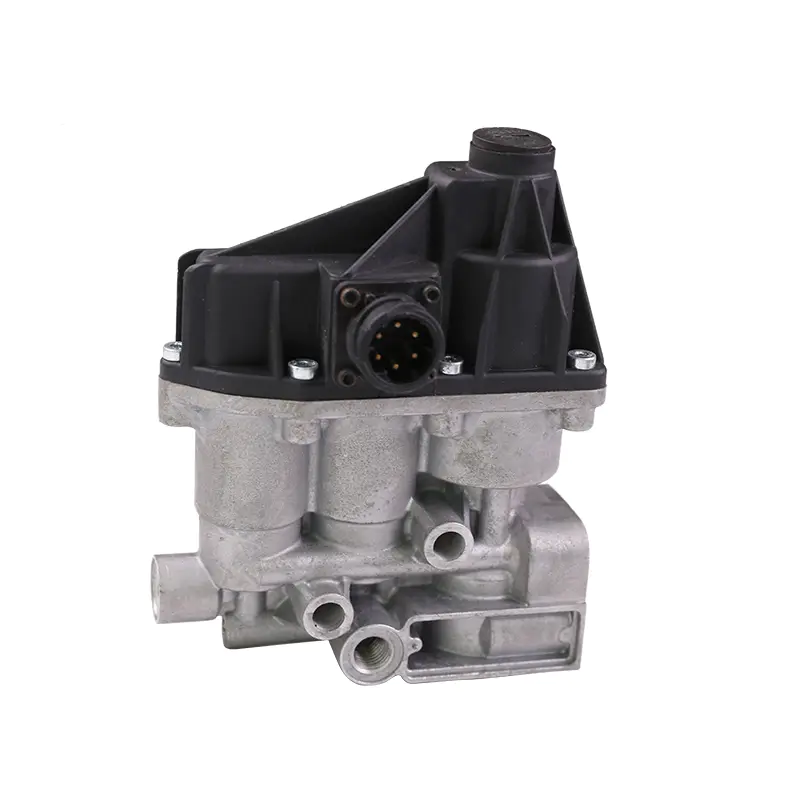
Druckluftbremssysteme sind in der Regel mit Druckreglern, Druckschaltern und Sicherheitsventilen ausgestattet, die zusammenarbeiten. Der Druckregler steuert den Start und Stopp des Kompressors, der Druckschalter überwacht die Luftdruckrückmeldung und das Sicherheitsventil dient als redundante Schutzvorrichtung, um sicherzustellen, dass mehrere Sicherheitsmechanismen wirksam sind. Das Design und die Einstellung des Sicherheitsventils sollten mit dem gesamten Luftdruckkontrollsystem koordiniert werden, um Fehlauslösungen oder überlappende Funktionen zu vermeiden und die Gesamtsicherheit des Systems zu verbessern.
Was sind die täglichen Wartungsprioritäten des Druckluftbremssystems?
Als wichtiges Sicherheitsgerät in schweren Fahrzeugen (wie Lastkraftwagen, Bussen und Anhängern) steht die Betriebsstabilität des Druckluftbremssystems in direktem Zusammenhang mit der Bremswirkung und Verkehrssicherheit des gesamten Fahrzeugs. Das System besteht aus einem Luftkompressor, einem Luftbehälter, einem Trockner, einem Bremsventil, einer Bremsluftkammer, einer Luftleitung und verschiedenen Steuerkomponenten. Es hat eine komplexe Struktur und ist häufig in Betrieb. Eine wissenschaftliche und standardisierte tägliche Wartung kann nicht nur die Lebensdauer des Systems verlängern, sondern auch plötzliche Bremsausfälle wirksam verhindern.
Überprüfen Sie die Luftdichtheit des Systems
Die air tightness of the system is the core of ensuring stable air pressure. During maintenance, it is important to check whether there is air leakage at various pipe joints, hoses, connectors, welds of air reservoirs, and valve body interfaces. Use soapy water smearing method or a special leak detector to detect subtle leaks. For rubber hoses, check whether they are aging, cracked, or falling off. Good air tightness can prevent the system air pressure from dropping too quickly, ensuring the reliability of emergency braking and parking brakes.
Lassen Sie regelmäßig Wasser und Verunreinigungen aus dem Lufttank ab
Die air tank is a gathering place for compressed air and is also the main area for condensed water and impurities to deposit. If it is not discharged in time, the water will corrode the cylinder, block the valve, and seriously affect the braking response. The air tank drain valve should be opened every day after parking to drain manually, especially in an environment with high humidity or low temperature. Some vehicles are equipped with automatic drainage devices, and their drainage function should also be checked regularly to prevent water accumulation.
Überprüfen Sie den Betriebszustand des Lufttrockners
Die air dryer is the first line of defense to prevent moisture from entering the brake system. It is necessary to regularly check whether the dryer filter element or adsorbent is saturated and ineffective. If it is found that the drying effect has deteriorated or a large amount of water is discharged from the air tank, the dryer filter element should be replaced in time. Note that the dryer exhaust port should be unobstructed and the exhaust valve should be sensitive to prevent water accumulation or freezing.
Halten Sie das Bremsventil reaktionsfähig
Die brake valve is the most directly related component of the air brake system to the driver's control. The brake valve pedal stroke should be checked regularly to see if it is appropriate, if the action is smooth, and if there is any jamming, air leakage or poor return. Check if the air chambers respond consistently during braking to avoid brake deflection or tail swinging due to asynchronous braking of the front and rear wheels. Disassemble and clean or replace seals if necessary.
Überprüfen Sie den Zustand der Bremskammer und der Stößelstange
Die brake chamber converts air pressure into mechanical braking force, and its reliability directly affects the braking effect. Focus on checking whether the air chamber shell is deformed, rusted or cracked, whether the push rod is freely retracted, and whether the dust cover is intact and undamaged. The spring mechanism of the parking brake spring chamber must function normally and the exhaust channel must be unobstructed. The push rod stroke must meet the manufacturer's standards to avoid insufficient braking force or damage to the air chamber.
Halten Sie die Luftleitung und die Verbindungsverbindung fest
Die air pipe connecting the various components in the brake system needs to have sufficient pressure resistance and heat resistance. Check the pipeline for looseness, detachment, rupture, expansion or wear on a daily basis. In particular, the hoses at the chassis or active parts of the vehicle are susceptible to vibration and dust. The connection joints should be tightened reliably, and the quick-connect joints should be cleaned of foreign objects regularly to prevent leakage. Pipes used for a long time should be replaced according to the degree of aging.
Überprüfen Sie die Notbrems- und Feststellbremsanlage
Notbremse und Feststellbremse sind wichtige Mechanismen, um sicherzustellen, dass das Fahrzeug auch dann noch zuverlässig anhalten kann, wenn das Gas weggenommen oder der Motor abgestellt wird. Bei der täglichen Wartung sollte überprüft werden, ob die Luftkammer der Federspeicherbremse die Bremse automatisch betätigen kann, wenn das Gas abgeschaltet wird. Der Parkhebel oder -schalter sollte präzise und empfindlich sein. Die Kapazität zur Aufrechterhaltung des Parkdrucks nach dem Abschalten des Systems muss der Norm entsprechen, um zu verhindern, dass das Fahrzeug aufgrund von Luftdrucklecks ins Rutschen kommt.
Erkennung von Manometer und Alarmgerät
Die pressure gauge on the instrument panel is an important basis for the driver to understand the system status. It is necessary to confirm that the pressure gauge display is accurate and without deviation on a daily basis. The high-pressure and low-pressure alarm indicators and buzzers should alarm in time when the air pressure is abnormal. If necessary, check the working status of the electrical circuit and sensor to avoid blind driving caused by the failure of the alarm system.
Führen Sie einen Systemluftdruckstabilitätstest durch
Beobachten Sie die Geschwindigkeit des Luftdruckaufbaus, indem Sie den Motor im Leerlauf laufen lassen und prüfen Sie, ob die Kompressorleistung ausreichend ist. Das System sollte die Druckabfallgeschwindigkeit nach dem Abstellen des Motors beibehalten, um den Standard zu erfüllen. Die Reaktionszeit der Bremse und die Druckabfallrate können durch manuelles Treten des Bremspedals beobachtet werden, um die Reaktionsfähigkeit des Systems und die Luftspeicherkapazität zu beurteilen.
Unsere Hauptprodukte
Heiße Neuigkeiten
Urheberrecht© Zhejiang Gongzheng Machinery Co., Ltd. Alle Rechte vorbehalten.
